In short. Quartz is a mineral: crystalline silicon dioxide, SiO2. Quartzite is a rock made almost entirely of quartz grains, formed from sandstone. Silica sand is a natural sand with a high share of quartz grains. Customs treats them separately: HS 2506.10 for quartz, 2506.20 for quartzite and 2505.10 for silica and quartz sands. Engineered “quartz” countertops are a fourth thing: manufactured slabs made mostly of crushed quartz bound with resin.
| Property | Quartz | Quartzite | Silica sand |
|---|---|---|---|
| What it is | A mineral: crystalline silicon dioxide | A rock: sandstone converted into solid quartz rock | A natural sand rich in quartz grains |
| Impurities | Trace amounts of elements such as aluminium, iron, titanium and lithium | Measurable amounts, sometimes as separate minerals such as hematite | Depend on the deposit; buyers test iron and heavy minerals |
| HS code | 2506.10 | 2506.20 | 2505.10 |
| Typical industrial forms | Lumps, grits and powder | Lumps for silicon and ferrosilicon; blocks | Graded sands for glass, foundry and filtration |
Quartz: the mineral
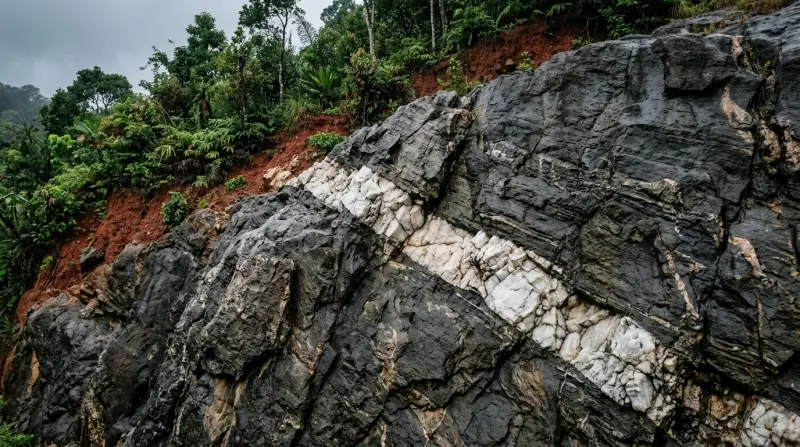
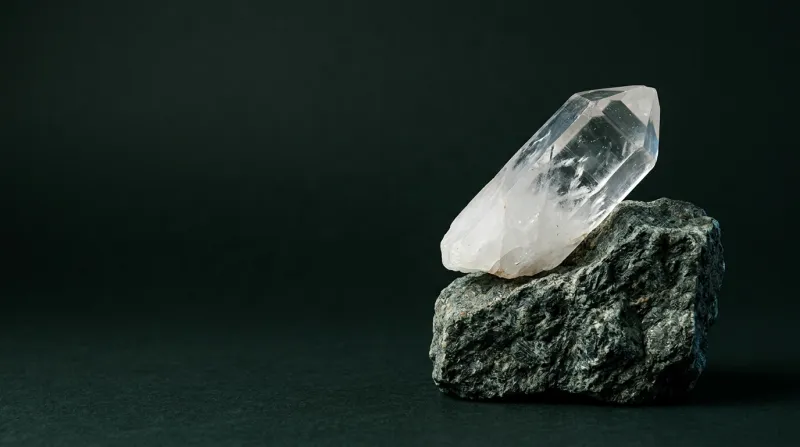
Quartz is silicon dioxide, SiO2, and it is abundant in the Earth’s crust, in igneous, metamorphic and sedimentary rocks. A Geological Survey and Mines Bureau geologist, writing in Vidurava, describes Sri Lanka’s vein quartz as formed when hydrothermal fluid rising from within the earth solidifies. Even clean quartz carries trace elements; the USGS calls quartz high-purity only below 100 parts per million of total impurities.
Quartzite: the rock
Quartzite is sandstone that has become solid quartz rock. Britannica distinguishes two kinds: quartz arenites, cemented by silica precipitated from groundwater, and metaquartzites, recrystallised under heat and pressure. Unlike sandstone, quartzite breaks through its grains, not around them. Britannica notes that most quartzites are 90% or more quartz, and some reach 99%. Legemza and co-authors list other minerals that can be present, such as calcite, hematite or dolomite.
Quartzite matters to silicon smelters. In high-temperature tests on their samples, Legemza and co-authors found the quartzites generally more stable than the quartzes.
Silica sand: the natural sand
The USGS groups high-silica sands and gravels as industrial sand and gravel, used in glassmaking and hydraulic fracturing among other uses. In customs terms, silica sands and quartz sands are one subheading, 2505.10. Crushed quartz is not a natural sand, so quartz grits are normally classed under 2506.10 even at sand sizes. For what glassmakers and foundries check, see the glass and foundry guides.
Quartz countertops are a fourth thing
Engineered stone, sold as “quartz”, is a manufactured slab made mostly of crushed quartz and quartz powder bound with resin. See Quartz for engineered stone.
Which one does a buyer need?
- Glass, foundry and water filtration usually specify a graded sand by grain size and chemistry.
- Ceramics, fillers and engineered stone use ground quartz: grits and powder (fine powder is also called silica flour).
- Silicon and ferrosilicon smelters buy quartz or quartzite lumps. See Quartz for silicon.
- Purifiers buy selected quartz as feedstock. See How quartz is purified.
We supply quartz grits and quartz powder from Sri Lankan vein quartz. See our products.
Common questions
Is quartz 100% silica?
Pure quartz is silicon dioxide, SiO2, but natural quartz always carries some trace elements. The USGS calls quartz high-purity when total impurities are below 100 parts per million.
Is silica sand the same as quartz sand?
In customs terms, yes: silica sands and quartz sands share HS subheading 2505.10. Both are natural sands made mostly of quartz grains.
Is quartzite the same as quartz?
No. Quartz is a mineral. Quartzite is a rock made mostly of quartz grains, formed from sandstone, and it can carry other minerals between the grains.
Sources
- World Customs Organization, Harmonized System 2022, heading 25.06 (quartz; quartzite) and Chapter 25 notes
- World Customs Organization, Harmonized System 2022, heading 25.05 (natural sands)
- Encyclopaedia Britannica, “Quartzite”
- Legemza, J. et al. (2021), “New Approach in Research of Quartzes and Quartzites for Ferroalloys and Silicon Production”, Metals 11(4), 670
- Lin, M., Pei, Z. and Lei, S. (2017), “Mineralogy and Processing of Hydrothermal Vein Quartz from Hengche, Hubei Province (China)”, Minerals 7(9), 161
- U.S. Geological Survey, Silica statistics and information
- U.S. Geological Survey, Mineral Commodity Summaries 2026: Quartz (high-purity and industrial cultured crystal)
- Weerakoon, D. (Geological Survey and Mines Bureau), article on quartz in Sri Lanka, Vidurava 30(1) (National Science Foundation repository)
Industry context. Figures on this page come from the sources listed and describe trade data, published standards or research. They are not a specification for our material. Our values are on each batch COA. Published October 2026.