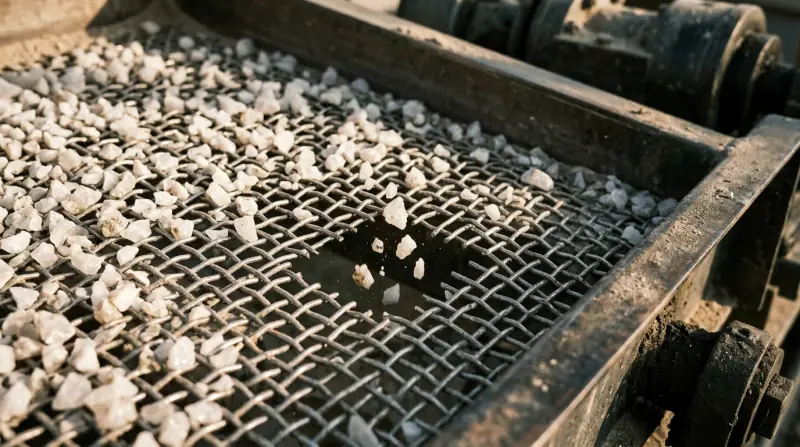
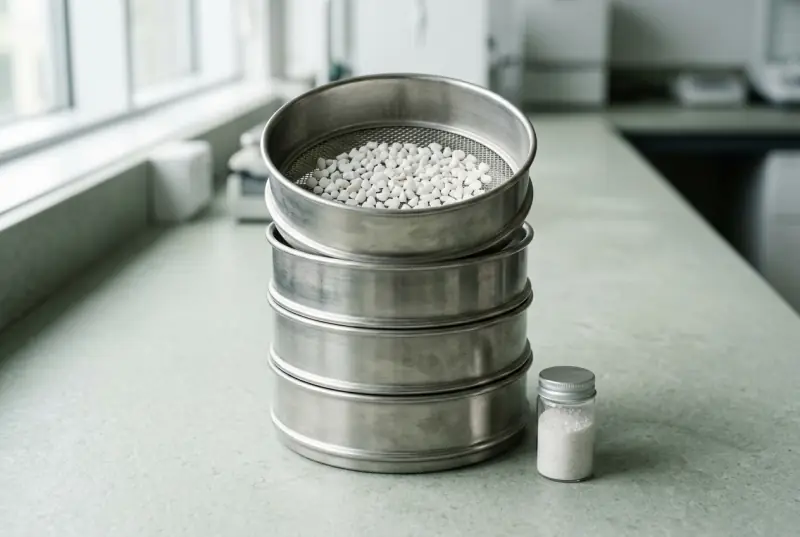
In short. Yes, quartz is used to make silicon. Smelters reduce quartz or quartzite lumps with carbon in submerged arc furnaces, at 1,400 to 1,900 °C and 11 to 13 MWh per tonne of silicon. They test trace elements, lump size (typically 10 to 150 mm), strength when handled and heated, and how readily the quartz reduces. Quartz grits and powder are too fine for the furnace charge; they go to other industries and to purifiers.
How is silicon made from quartz?
Silica as quartz or quartzite is the raw material for silicon metal and for ferrosilicon, an alloy of iron and silicon. Both are made in submerged arc furnaces. Carbon reductants such as coke, coal, anthracite or charcoal take the oxygen from the silica; for ferrosilicon, iron is added to the charge.
In simple terms the reaction is SiO2 + 2C → Si + 2CO. Inside the furnace it runs through silicon monoxide gas and silicon carbide. Legemza and co-authors give 1,400 to 1,900 °C for the reduction and 11 to 13 MWh of electricity per tonne of silicon.
| Product | Main uses |
|---|---|
| Ferrosilicon, standard grades 50% and 75% silicon | Ferrous foundries and steelmaking |
| Silicon metal | Aluminium alloys, and the chemical industry, in particular silicones |
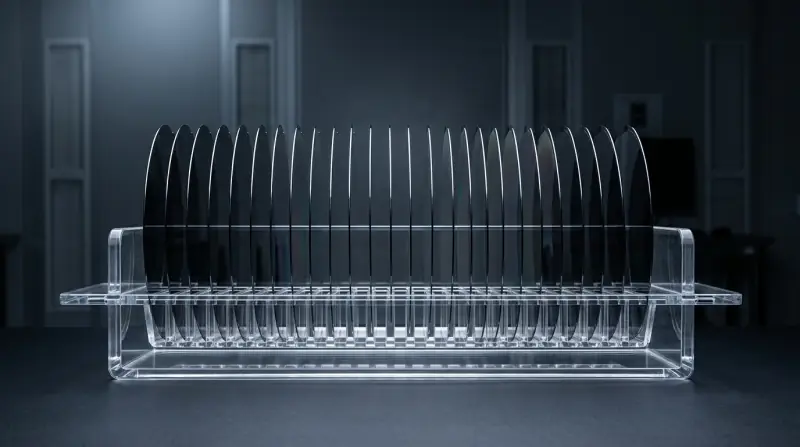
| High-purity silicon | Semiconductors and solar cells, refined from silicon metal |
What do smelters test in quartz?
Chemistry is only the start. Legemza and co-authors list what the industry checks in quartz and quartzite for silicon and ferrosilicon:
- Trace elements, for example aluminium, titanium, boron, phosphorus, iron and calcium
- Lump size, typically 10 to 150 mm
- Mechanical strength: how much the lumps crush and make fines during handling and transport
- Thermal strength: how many fines form when the quartz is heated
- Softening and melting behaviour
- Reducibility: how readily the silica reduces in the furnace
Fines matter because they can choke the gas flow through the furnace charge. Some quartz types break apart at 850 to 1,000 °C, so smelters test thermal stability with methods such as the Elkem (Fiskaa) method. The same study concludes that judging a quartz for silicon on chemical composition alone is not enough.
Geoscience Australia puts typical silica for metallurgical-grade silicon at 98 to 99% SiO2.
How pure does silicon get?
Silicon metal from the furnace is the base for every grade. Semiconductor and solar cell silicon need far purer material, refined from silicon metal, and the crucibles used to grow silicon ingots are made from high-purity quartz. The USGS defines high-purity quartz as natural quartz with less than 100 parts per million of total impurities. For what N grades mean, see Quartz purity grades; for crucibles, see Quartz in the solar supply chain.
Where do quartz grits and powder fit?
Not in the furnace. A smelter’s charge is lumps, and fines count against a quartz source. Grits and powder go to glass, ceramics, engineered stone, foundry, filtration, fillers and refractories, and to customers who purify quartz further. Our products are quartz grits and quartz powder. We do not offer lump quartz for smelting at present.
See the buyer guides by industry, or our products.
Common questions
Is quartz used to make silicon?
Yes. Quartz or quartzite is reduced with carbon in submerged arc furnaces to make silicon metal and ferrosilicon. Semiconductor and solar silicon is refined from that silicon metal.
Can quartz sand or powder be used to make silicon metal?
Not normally as direct furnace charge. Smelters buy lumps, typically 10 to 150 mm, because fines reduce the gas flow through the charge.
What is the difference between silica and silicon?
Silica is silicon dioxide, SiO2, the compound quartz is made of. Silicon is the element, made by removing the oxygen from silica in a furnace.
How much does 1 kg of silicon cost?
The USGS estimates the 2025 mean US import price of metallurgical-grade silicon metal at 130 cents a pound, about US$2.87 a kilogram.
Sources
- U.S. Geological Survey, Silicon statistics and information
- U.S. Geological Survey, Mineral Commodity Summaries 2026: Silicon
- Legemza, J. et al. (2021), “New Approach in Research of Quartzes and Quartzites for Ferroalloys and Silicon Production”, Metals 11(4), 670
- Geoscience Australia, High Purity Silica
- U.S. Geological Survey, Mineral Commodity Summaries 2026: Quartz (high-purity and industrial cultured crystal)
Industry context. Figures on this page come from the sources listed and describe trade data, published standards or research. They are not a specification for our material. Our values are on each batch COA. Published October 2026.