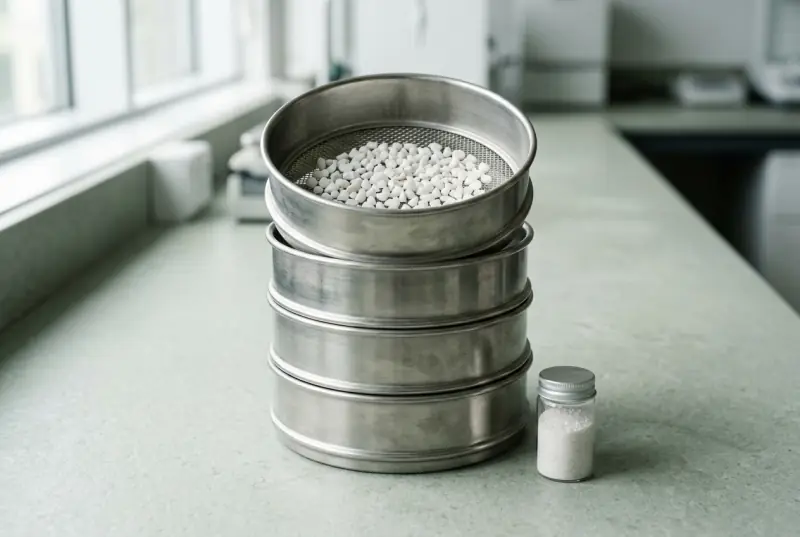
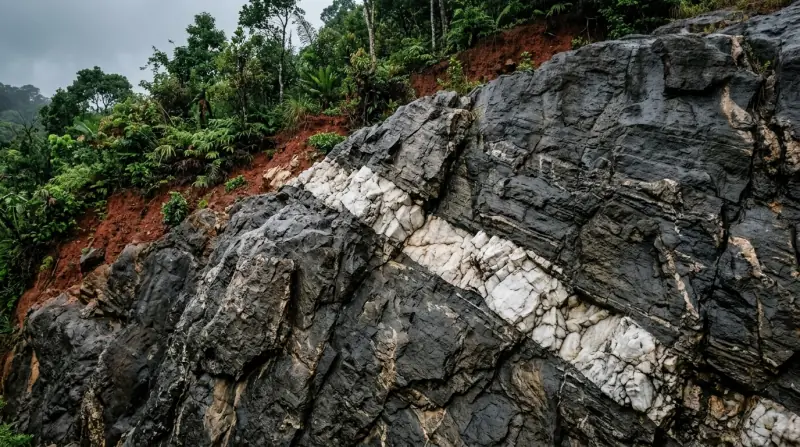
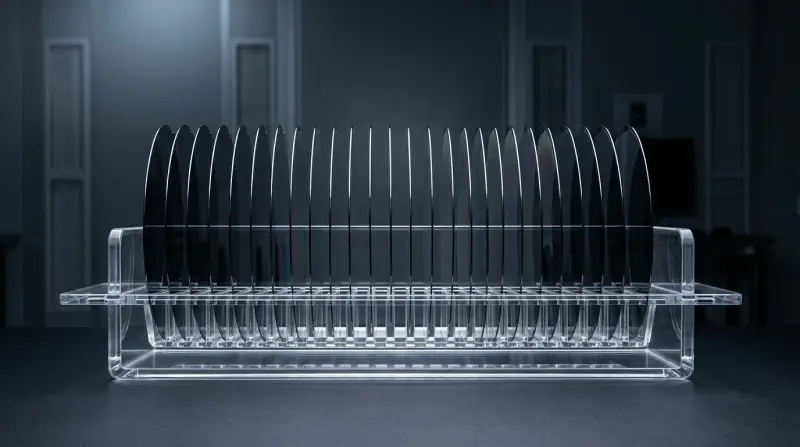
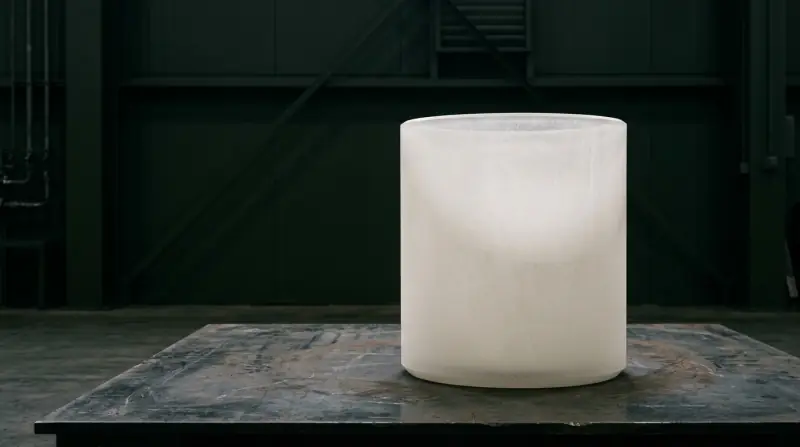
In short. Quartz appears twice in solar: as lump quartz that smelters reduce to silicon, and as fused-quartz crucibles that hold molten silicon while ingots grow. Each use has its own specification, and crucible material must be purified and qualified by the downstream manufacturer. quartz.lk supplies feedstock for that chain, not finished crucible material.
quartz.lk supplies processed quartz feedstock. It is not solar-grade or crucible-grade material. Any photovoltaic use requires further purification and qualification by the downstream manufacturer.
Most solar panels start as quartz. The chain runs from quartz to metallurgical-grade silicon, then to high-purity polysilicon, crystal ingots, wafers, cells and modules. Quartz appears at two points along it, and the two uses ask for very different things.
Quartz as raw material for silicon
Metallurgical-grade silicon is made by reducing quartz with carbon in electric arc furnaces. Smelters buy lump quartz or quartzite in a defined size range, with limits on elements such as iron, aluminium, calcium and phosphorus, and with requirements on how the lumps behave when heated. The silicon is then refined chemically into polysilicon, so the quartz at this point does not need to be ultra-pure. It needs to be consistent and suited to the furnace.
Quartz as crucibles for ingots
Most solar wafers today are cut from monocrystalline ingots grown by the Czochralski method: silicon is melted in a fused-quartz crucible and a single crystal is pulled slowly from the melt. The crucible touches molten silicon for many hours, so anything in it can end up in the crystal. Crucible makers use high-purity quartz sand for the body, with the strictest grade on the inner surface. They set tight limits on individual elements, on particle-size distribution and on how the sand behaves during fusion, and they qualify each source before use.
What that means for vein quartz
Sri Lankan vein quartz has the potential to serve as feedstock for the higher-purity quartz products used in photovoltaic supply chains. Crucible-grade material, though, is subject to strict elemental impurity, particle-size and process requirements, and it must be qualified by the downstream manufacturer. Getting there from processed vein quartz takes further purification by a specialist, then qualification.
So we describe our role narrowly. quartz.lk supplies processed high-purity quartz feedstock from Sri Lankan vein quartz deposits, for industrial applications and for further downstream purification and qualification.
Questions to ask any supplier
- Which elements were measured, by which method, and at what detection limit?
- How many batches do the figures represent, and how much did they vary?
- Has a downstream manufacturer qualified the material, and for which use?
Revised September 2026 to separate industry background from what quartz.lk supplies.