In short. Sri Lankan vein quartz grew from silica-rich fluids in fractures of ancient metamorphic rock, so a vein can hold large volumes of quartz with few other minerals mixed in. Purity still varies by deposit, vein, mining area and sample. Physical processing reduces mineral contaminants, lattice impurities remain whatever the process, and batch testing sets the specification a supplier can hold.
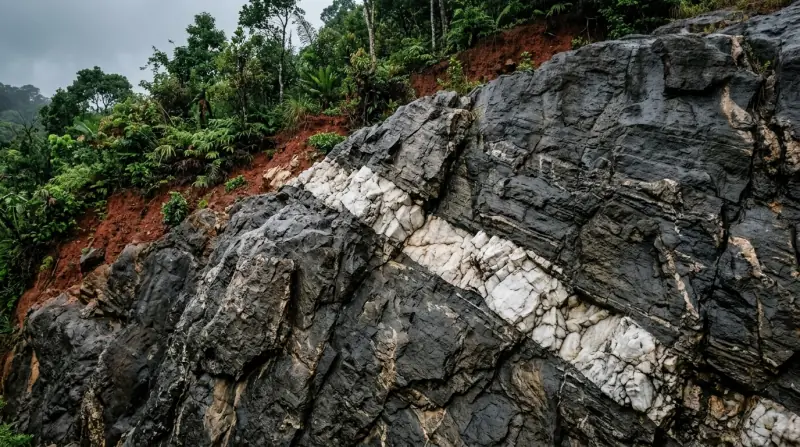
Most of Sri Lanka sits on ancient metamorphic rock: gneisses, charnockites, quartzites and marbles that formed deep in the crust and were later exposed. Where silica-rich fluids moved through fractures in this basement, they left veins of quartz. Some of that vein quartz is coarse, milky white and naturally high in SiO2.
Why vein quartz can be clean
Vein quartz grew from fluid into open fractures, so a vein can hold large volumes of quartz with few other minerals mixed in. That makes it a good starting point for industrial silica and, in some cases, for further purification.
Why purity varies
A deposit is not one material. SiO2 content and impurity levels change from vein to vein, along a single vein, and from one mining area to the next. Common sources of contamination are:
- host rock at the vein margins, mixed in during mining;
- iron staining along fractures and grain boundaries;
- inclusions of other minerals, such as mica and feldspar;
- fluid inclusions trapped as the quartz grew;
- impurities built into the crystal lattice, mainly aluminium and titanium.
The first three respond to careful mining and physical processing. Fluid inclusions need finer size reduction and thermal or chemical treatment. Lattice impurities remain whatever the process.
What physical processing can do
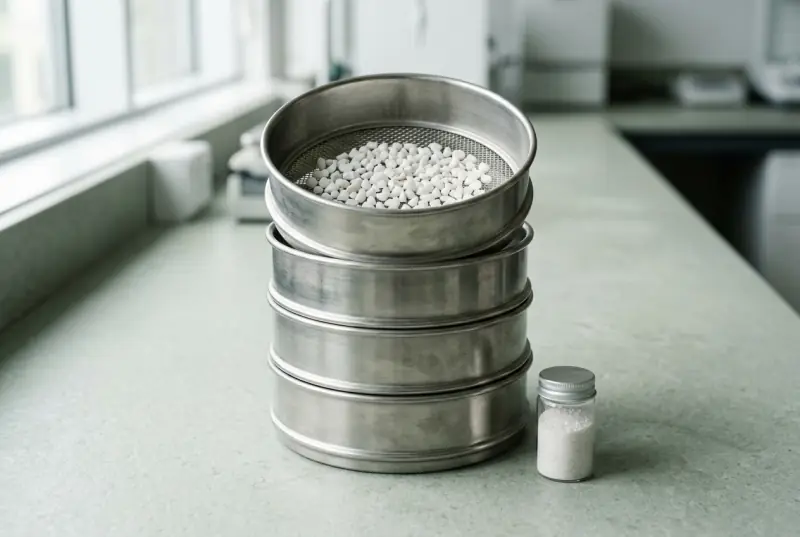
Selective mining, crushing, screening, sorting and physical separation can reduce a range of mineral contaminants and improve consistency. Higher-purity specifications may need additional downstream processing, depending on the impurity profile and the intended application.
Characterisation comes first
Sri Lankan vein quartz can show naturally high SiO2 content, but purity varies by deposit, vein, mining area and individual sample. Detailed geological characterisation and batch testing establish the specification a supplier can actually hold. A single assay from a hand-picked sample does not.
Questions to ask a supplier
- Which mining area does the material come from?
- How many samples stand behind the figures, and how were they taken?
- Which method was used for trace elements, and at what detection limit?
- How much did results vary between batches?
Revised September 2026 to separate industry background from what quartz.lk supplies.