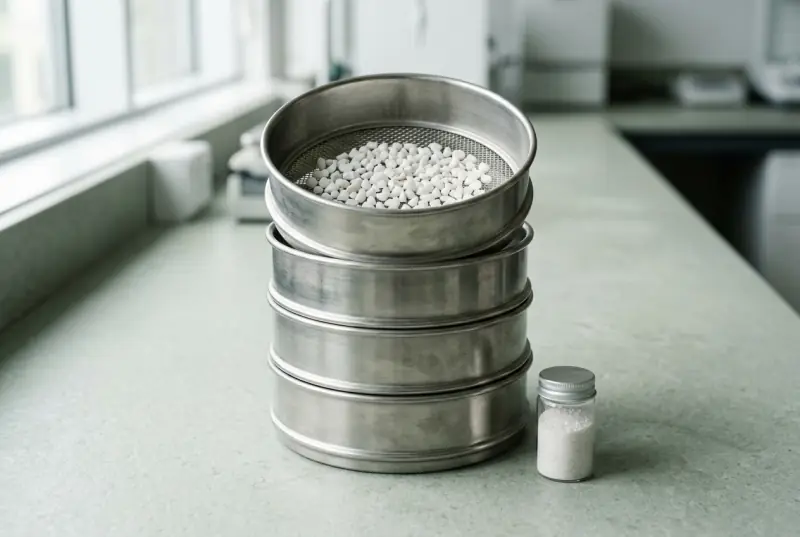
In short. A mesh number counts the openings per linear inch of a test sieve, so a higher number means a finer size: 20 mesh is 850 µm, 100 mesh is 150 µm, 200 mesh is 75 µm and 325 mesh is 45 µm. For powder finer than sieves can separate well, specify the size by laser diffraction, for example a median (D50) and a top size (D97).
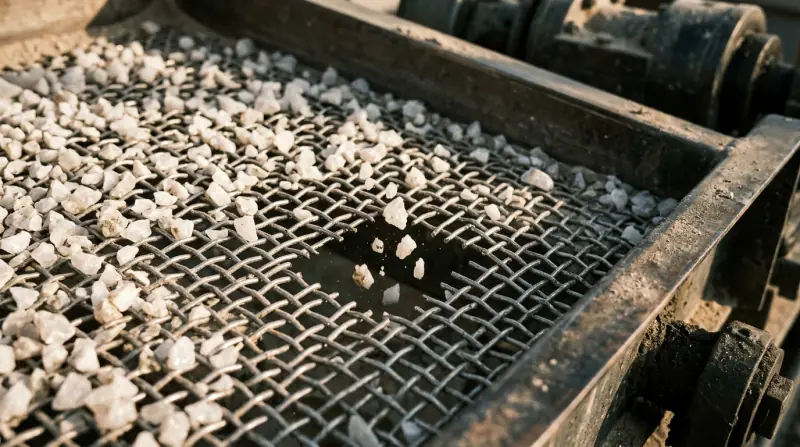
Mesh to micron
Openings of US standard test sieves (ASTM E11). ISO 3310-1 sieves use the same openings but are labelled in millimetres or micrometres rather than by mesh number.
| Mesh | Sieve opening |
|---|---|
| 4 | 4.75 mm |
| 6 | 3.35 mm |
| 8 | 2.36 mm |
| 10 | 2.00 mm |
| 12 | 1.70 mm |
| 16 | 1.18 mm |
| 18 | 1.00 mm |
| 20 | 850 µm |
| 30 | 600 µm |
| 40 | 425 µm |
| 50 | 300 µm |
| 60 | 250 µm |
| 70 | 212 µm |
| 80 | 180 µm |
| 100 | 150 µm |
| 120 | 125 µm |
| 140 | 106 µm |
| 170 | 90 µm |
| 200 | 75 µm |
| 230 | 63 µm |
| 270 | 53 µm |
| 325 | 45 µm |
| 400 | 38 µm |
Grits and powder
In the quartz trade, grits usually means crushed and screened fractions, from a few millimetres down to around a tenth of a millimetre. Powder means material milled finer, often specified below 75 µm (200 mesh) or by a micron value.
How to specify a size range
- Give both limits of the range, for example 0.1 to 0.6 mm, and name the sieve standard you test with.
- Say how much material may fall outside the range, for example no more than 5% oversize or undersize.
- For powder, name the method, sieve or laser diffraction, and the values you need, such as D50, D97 or a top size.
- If shape matters for your process, say so. Crushed quartz grains are angular, not rounded.
Mesh numbers are not all the same
Older Tyler mesh numbers differ slightly from the US standard at some sizes, and a mesh number on its own does not say which standard was meant. Write the opening in millimetres or micrometres next to any mesh number in a specification.
How we work
Tell us the range and the method you test with. The size planner on the products page carries a range into your request.
Published September 2026.